

What is pressure canning?
Pressure canning is a method for preserving low-acid foods such as vegetables, meat, poultry, fish, beans, soups and complete meals in sealed jars. It uses pressure to reach temperatures above the boiling point of water, making it suitable for foods that cannot be safely preserved in a boiling-water bath.
you guys can fibgure this out joejoe
Short answer:
What does 'pressure canning' mean excactly?
Pressure canning means processing filled jars in a pressure canner. Because the canner is sealed and pressure builds up inside, the temperature can rise above 100°C. This makes pressure canning suitable for low-acid foods that cannot be safely preserved in a boiling-water bath. It is different from simply sterilising jars or boiling filled jars. The goal is not only to create a vacuum seal, but also to heat the food inside the jar for the correct time and at the correct pressure.
Why would you start pressure canning?
What would you use pressure canning for?
Fish Meat & poultry
Vegetables
Complete meals
Pressure canning is the safest way to preserve foods with low acidity. The CanMates are able to heat up it's content to 121 degrees celsius, unlike any other pot. That's because it works by pressurizing it's contents. - preserve garden harvests; - store soups, stocks and sauces; - prepare shelf-stable meals; - reduce freezer dependence; - save seasonal produce; - build a practical pantry.
Weck method vs. pressure canning
Temperature: 100 degrees celsius
For high acid foods like jams and fruits
NOT SAFE for meat, fish and vegetables
.png)
Temperature: 115-121 degrees celsius
For low acid foods: meat, fish and vegetables
No suitable for foods and recipes without reliable processing guidance
.png)
WECK
PRESSURE CANNING
Suitable for foods with reliable processing guidance.
How does it work?
8 simple steps
Prepare the recipe and jars
Use a recipe with reliable processing guidance
Fill the jars
Leave the correct headspace and remove air bubbles where required.
Place the jars in the CanMate
Use the rack and add the required amount of water.
Vent the CanMate
Let steam escape for the required venting time before pressurising.
Process at right temperature
Keep the pressure stable for the full processing time.
Let the pressure drop naturally
Do not force-cool the canner.
Remove the jars and let them rest
Let jars cool undisturbed.
Check seals and store correctly
Store only properly sealed jars in a cool, dark place.


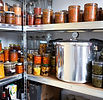

Pressure canning in Europe
_edited_edited_.png)
Which CanMate do you need?
Pressure canning is still relatively new for many European home preservers. Many people are familiar with Weck jars, water-bath preserving or sterilising, but pressure canning is a different method. It is especially relevant for low-acid foods such as vegetables, meat, fish, beans, soups and stocks.
At Pressure Canning Products, we focus on making pressure canning understandable and practical for European households. That means suitable equipment, clear guidance, spare parts, support in multiple languages and recipes that fit the way people cook in Europe.
CanMate 11QT
For smaller households and smaller batches.
Fits 5 × 1 litre jars or 5 × 500 ml jars.
CanMate 22QT
Our most popular model for regular home preserving.
Fits 7 × 1 litre jars or 18 × 500 ml jars.
CanMate Pro 50QT
For large batches and professional use.
Is Pressure Canning safe?
Pressure canning can be a safe method for preserving low-acid foods when it is done correctly. The safety depends on using the right pressure, processing time, jar size, recipe and cooling method.
The reason pressure canning is used for low-acid foods is that a pressure canner can reach temperatures above 100°C. These higher temperatures are needed to deal with the risk of harmful microorganisms, including the risk associated with botulism, when preserving foods such as vegetables, meat, fish, poultry, beans and soups.
Always follow reliable processing guidance and do not invent your own processing times for low-acid foods.
Need help?
Our customer service is always happy te help. Just reach out to us if you have any questions.
.png)
.png)
_edited.png)
FAQ
Why can’t I use water-bath canning for vegetables and meat?
Vegetables, meat, fish, poultry, beans and most soups are low-acid foods. They require higher processing temperatures than a boiling-water bath can provide.
What foods can I pressure can?
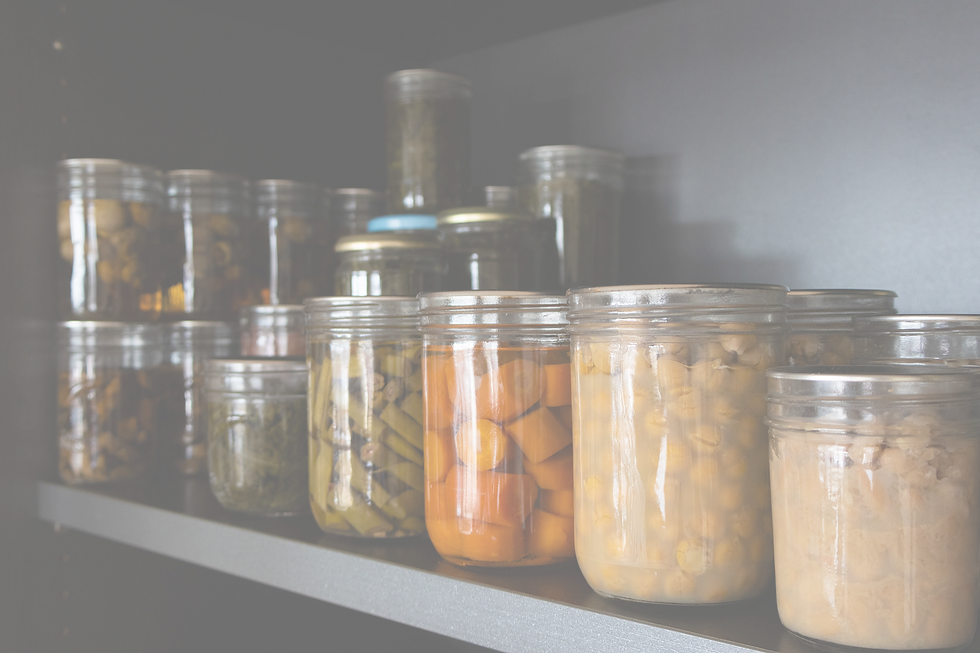
Common pressure-canned foods include vegetables, beans, meat, poultry, fish, stocks, soups, sauces and some complete meals, as long as reliable processing guidance is followed.
What pressure do I need?
The required pressure depends on the recipe, your altitude and the type of pressure canner. Many processes use 10 PSI at lower altitudes and 15 PSI at higher altitudes, but always follow the specific guidance for your situation.
Can your Canmate 22QT be used on gas, electric, ceramic and induction hobs?
This depends on the pressure canner model. The CanMate 22QT and 11QT are designed for use on common European heat sources, like gas, electric, induction and ceramic stoves, but always check the product page and manual for the exact model. The CanMate PRO 50QT is only suitable for gas and electric stoves.